EN DE PL
BA
Main Features:
A
- Long Lif
When scouring or stripping a wooden floor
- Easy Installation
should remove the carbon monoxide detector and keep it in a safe plac
- T
sensor
- Lo
in a false alarm: methane, propane, isopropyl butane
- Supplied
benzene, toluene, ethyl ac
- Cannot Be F
alcoholic products, paint, solvents, adhesiv
agents can cause damage.
This instruction leaflet contains important information on the correct installation and
BA
operation of your C. Read this leaflet fully before attempting installation and r
If the CO Alarm emits a short 'beep' at the same time the green led flashes, the battery is at the end
for future referenc
of its life and should be replaced immediately7
days. A fresh batt If the green indicator ligh
SPECIFICA
not flash every minute then replace the battery.
Pow : DC 4,5V ~ 3x AA 1,5VDC, LR6, Alkaline
- Remove the ba
Sensor T : Electrochemical
- Pr
Type of Gas sensed : Carbon Monoxide
- Insert a new batteries (3x LR6 1,5V Alkaline) NOTE POLARITY OF CONNECTIONS.
Sensor Life time : 7
- Let the alarm warm up first f
Alarm activation : 50 ppm (Between 60-90 min.)
seconds when you press the test button)
: 100 ppm (Between 10-40 min.)
- Using the
: 300 ppm (
- Reattach the C
Operation : 0°C~45°C (storage: -20°~50°C ± 2°C)
- Replace the battery each year
Ambient Humidity : 0 %~ 90% RH
Horn Level : > 85 Decibels at 1 metres
Note: Pressing the test button t
Battery Life : 1 year minimum
false alarm. In this case, remove the battery again, wait approx. 5 minut
WHA
WHA
Carbon Monoxide (C
In the event the CO alarm raises an alarm:
odorless, tasteless gas and therefor
- Immediately mov
CO kills hundreds of people each year and injures man
area and allow the carbon monoxide to disperse
blood and reduces the amount of oxygen being circulated in the body
- Where possible turn off fuel burning appliance
can kill in minutes. CO is produced b
- Evacuat
coal, heating oil, paraffin, petr
- Do not re-enter the premises nor move awa
Examples of CO sources:
services responders have arrived, the premises have been airand your alarm remains in its
- Running engine in garage - Gas appliances
normal condition.
- Oil and Gas furnaces - P
- Seek medical help immediately f
- W - Gas or kerosene heaters
drowsiness, nausea, etc.
- Barbecues - Clogged chimneys
- Do not use the appliances again until they hav
- W - Heating boiler
fault located and cleared.
SYMPT
IMPORT
The following symptoms may be relat (ppm = parts per million/ 1:1000.000) :
Installing a CO-detector is only the first step towards safer living conditions. Make sure that y
35 ppm The maximum allowable concentration f
other members of your household are familiar with the cause and effect of carbon monoxide
any 8 hour period.
poisoning and how to operate a C
200 ppm Slight headaches, fatigue, dizziness, nausea after 2-3 hours
- T
400 ppm Frontal headaches within 1-2 hours, life threatening after 3 hours.
- Immediately replace lo
800 ppm Dizziness, nausea and convulsions within 45 minutes. Unconsciousness
- Only purchase appr
Death within 3 hours.
- Install combustion devices in the correct way and strictly follow the instructions of the
1600 ppm Headache, dizziness and nausea within 20 minutes. Death within 1 hour
manufacturer
6400 ppm Headache, dizziness and nausea within 1-2 minut
- Hav
- Hav
LOCA
- Clean your chimney and drainage onc
Carbon Monoxide alarm is designed to detect the toxic C
- Regularly check all combustion devices.
combustion, such as those emitted from appliances, furnaces, fir
- V
dwelling is on a single storey
- Never use y
the hallway of sleeping areas. Plac
- Ensure sufficient v
is audible when the bedrooms are occupied. If your dw
- Alway
at least one alarm on each floorNOTE: For maximum protection an alarm should be fitted in or near
every room that contains a fuel-burning appliance such as any gas fires
heaters, water heaters
NEVER:
- Never burn charc
CAUTION: This alarm will only indicate the pr
- Never r
monoxide gas may be present in other ar
and required skills to do so.
- Never use a gas range
- Never use sto
A CARBON MONOXIDE ALARM DOES NO
- Never let diesel or petr
FOR A SMOKE OR GAS DETECTOR
- Never ignor
- Never ignor
POSITIONING THE C
Carbon Monoxide has a similar density to warm air and, to ensure that the most effective use is
This CO alarm is designed to only sense Carbon Mono
made of the detector
It is NOT designed to detect smoke, fire and other gases
1.85 metres (6 feet) from the appliance (1).
Areas to be avoided include the follo
THIS PRODUCT CANNOT BE REP
- Situations where the t° C or rise above 40° C
- In a damp or humid area
GUARANTEE.
- Any arcontaminat
PROOF
clog the sensor
- Behind drapes or furniture
This
- In the path of air discharged from a furnace / air cor ceiling fan.
installed
- Outside the building
acute effects
- Directly above a sink or c
medical
CAUTION:
moisture. It will not protect against the risk of carbon monoxide poisoning when the battery has
drained. Do not open or tamper with the alarm as this could cause malfunction
INST
This CO alarm is power
the wall using the fixings provided or on a tabletop
W
- Having established the mounting location ensurwiring or pipe work
in the area adjacent to the mounting surface.
- Mark the two mounting hole locations (2) .
- Drill holes in the positions marked.
- Insert wall plugs into the drilled holes.
- Screw mounting bracket t (3)
- Insert 3xLR6 Alkaline battery firmly into battery compar (4) .
NOTE F
- Assemble the alarm onto the mounting pla (5) .
T the front of the
alarm for 2S and then release it.
same time.
OPERA
Normal Operation
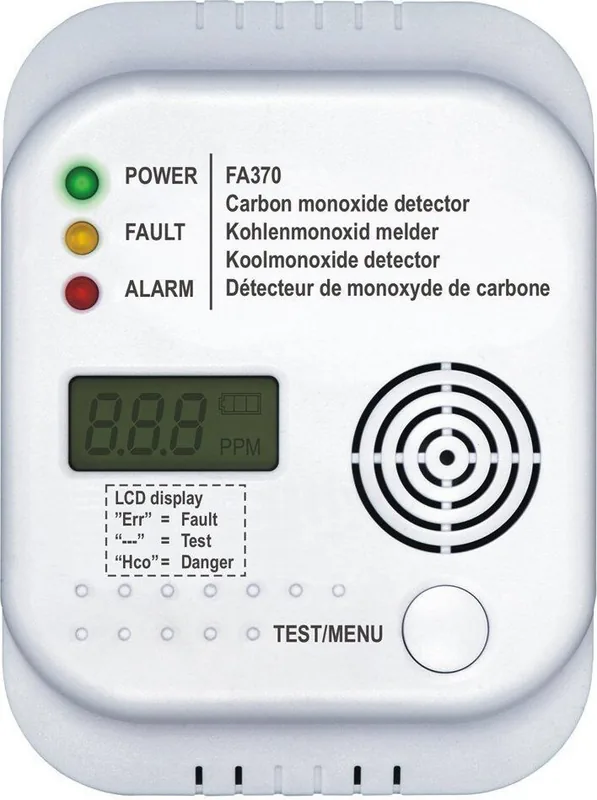
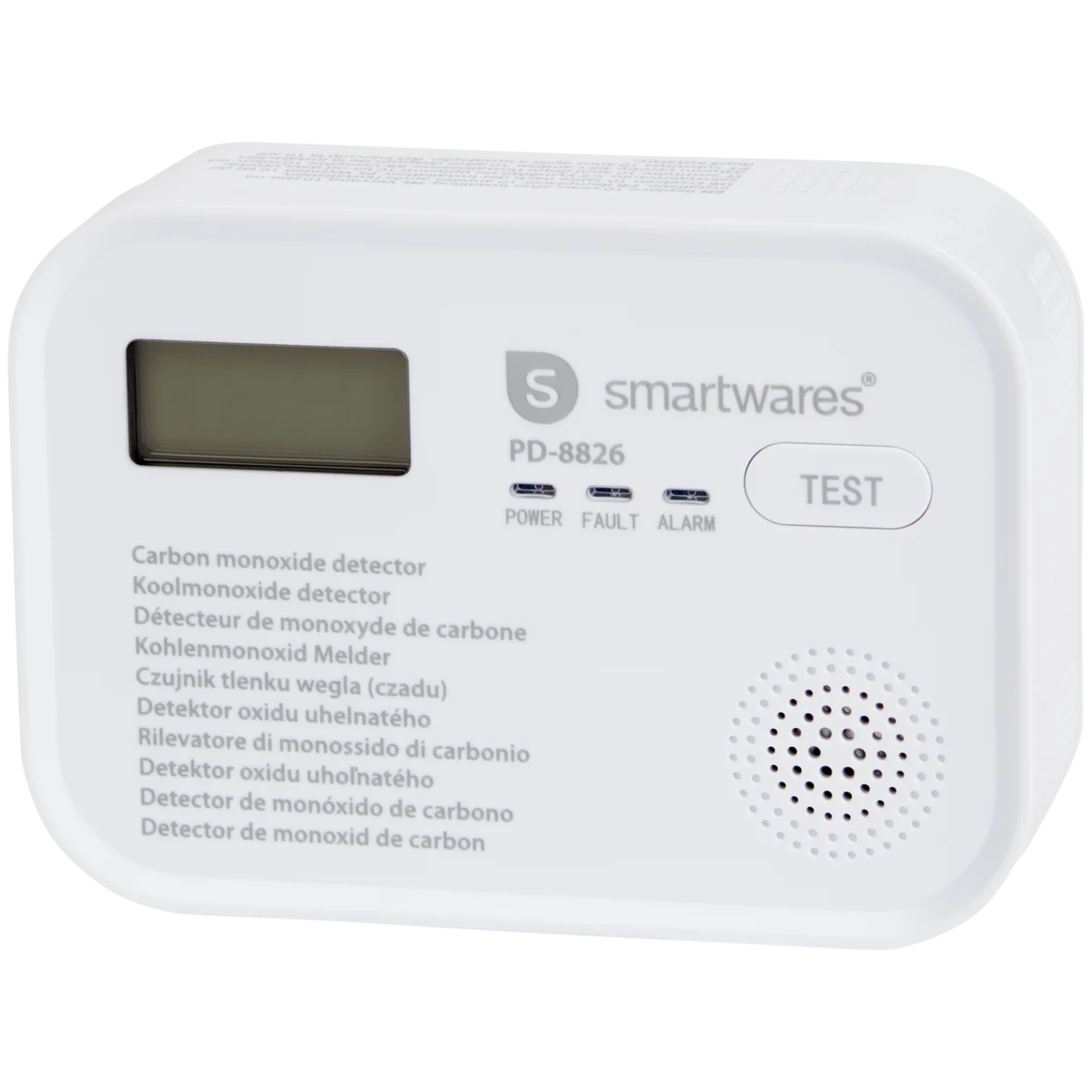
When no carbon monoxide is present, the gr every 45 sec. and is an indication that
your alarm is powered and functional.
Alarm Condition
When the unit detects dangerous levels of CO
flashing of Red LED.
CO levels return to normal, the unit will stop beeping
and return to standby mode automatically
CO-LEVEL (PPM) RESPONSE
50 ppm 60-90 min.
100 ppm 10-40 min.
300 ppm <3 min.
Return to Normal Operation
When the carbon monoxide gas disperses and the unit has been reset, the alarm signal will stop
green power lamp will contwice every minute.
Low Battery Signal
When your battery needs replacing, the unit will beep and green LED indictaor wil flash at the same
time (every 45 seconds) for up to 7 days.
NOTE - with normal use the batteries will last for 1 y
reduced if either a fault occurs with the battery or the alarm remains in alarm for long periods of
time.
Unit Malfunction
If the unit has detected an errortwice per 10
seconds at the same time indicating that your alarm has failed.
TESTING Y
It is recommended that you test your C
correctly.
- By holding the test button on the fr
sound 4 beep tones and the red LED will flah at the same time.
MAINT
- Y
maintained properly
recommended that you:
- T
- Clean your CO alarm regularly to prevent dust build up vacuum
cleaner with the brush attachment once per month. Clean gently around the front grilled section
and sides.
- Never use cleaning solutions on y
- Do not paint the alarm
: For indoor use only
: Read the manual before use, and keep it in a safe
place for future use and f
: For DoP go to: service.smartwares.eu/dop
and follow instructions.
BA
Eigenschaften: ACHTUNG:
Beim Reinigen oder Abbeizen von Holzböden, Anstreichen,
- Langlebiger elektro-chemischer Sensor
Kleber und Aerosolen sollten Sie den CO-Melder entfernen und ihn zum Schutz vor Schäden an
- Einfache Installation
einem sicheren Ort aufbewahren. Hohe Konzentrationen der folgenden Substanzen können den
- T
Sensor schädigen und dadurch häufige Fehlalarme auslösen: Methan, Propan, Iso P
- Batterie-Kontrollanzeige
Butan, Äthylen, Ethanol (Alkohol), Iso Pr
- Lieferung einschließlich Schrauben und Dübeln
Hydrogensulfat, und Schwefeldio
- Kann nicht ohne Batterie montiert werden
Klebstoffe, Haarspray
anrichten.
Diese Bedienungsanleitung enthält wichtige Informationen zu Montage und Betrieb Ihres
Kohlenmonoxid-Alarms
AUST
Montage beginnen und heben es für späteres Nachlesen auf
Sendet Ihr CO-Alarm ein kurzes Alarmsignal zur gleichen zeit, das die grüne LED blinkt, dann geht
die Lebensdauer der Batterie ihrem Ende entgegen. Sie sollte nun un
SPEZIFIKA
Alarmsignal wird für etwa 7
Seisung : DC 4,5V ~ 3x AA 1,5VDC, LR6, Alkaline
einem Jahr
Sensor T : Elektro-chemisch
- Entnehmen Sie die Batterie aus dem Batt
Gemeldete Gasart : Kohlenmonoxid
- Drücken Sie den
Sensor Lebensdauer : 7 Jahre
- Setzen Sie neue Batterien (3x LR6 1,5V Alkaline) BEACHTEN SIE DIE POLARIT
Auslösewert : 50 ppm (Zwischen 60-90 min.)
- Lassen Sie zuerst den Melder sich 2 Minuten aufwärmen.
: 100 ppm (Zwischen10-40 min.)
- T
: 300 ppm (Innerhalbl 3 minutes)
- Setzen Sie den C
Betriebstemperatur : 0°C~45°C (lagerung: -20°~50°C ± 2°C)
- Ersetzen Sie die Batt
Luftfeuchtigkeit : 0%~90% RH
Lautstärke Sirene : >85dB in 1 m Abstand
W
Batterie Lebenserwartung : min. 1 Jahr
Im Fall eines C
- Begeben Sie sich unv öffnen alle
W
Fenster und
Kohlenmonoxid (C
verflüchtigt hat.
farb-, geruchs- und geschmacklos und daher mit den natürlichen Sinnen nur schwer aufzuspüren.
- Sofern möglich, schalten Sie Br
CO tötet hunderte von Menschen und führt zu noch viel mehr V
- Evakuier
Hämoglobin im Blut und reduziert die Sauerstoffmenge, die im Körper transportier
- Betreten Sie das Gebäude nicht erneut bzw
Bei hoher Konzentration tötet C
solange Rettungsdienste nicht eingetroffen, die Räume durchlüftet sind und sich Ihr Alarm
CO wird durch unv
wieder im Normalzustand befindet.
Heizöl, P
- Nehmen Sie unv
Beipiele für CO Quellen:
Kopfschmerzen, Benommenheit oder Übelkeit usw. leiden.
- Laufender Motor in der Garage - Gas-Haushaltsgeräte
- Benutzen Sie die entspr
- Öl- und Gasbrenner - P
qualifizierten Kundendienst überprüft zu haben und die Fehlfunktion bestimmt und beseitigt
- Holzöf - Gas- oder Ölheizgeräte
wurde.
- Grills - Blockierte Schornsteine
- Holz- und Gaskamine - Heizungskessel
WICHTIGE SICHERHEITSHINWEISE
Der Einbau eines CO-Melders ist der erste Schritt zu einem sichereren Lebensumfeld
SYMPT
Sie sich, dass Sie und alle anderen Haushaltsmitglieder sowohl mit dem Gebrauch und der F
Nachstehende Symptome können CO-V
des CO-Melders, als auch mit den Anzeichen einer C
(ppm = T
umzugehen wissen:
35 ppm Die höchstzulässige andauernde Konzentration für Erwachsene während eines 8-
- T
Stunden-Zeitraums.
- T
200 ppm Leichte Kopfschmerzen, Ermüdung, Schwindelgefühl,Unw
- Nur geprüfte
400 ppm Strinseitige Kopfschmerzen innerhalb 1-2 Stunden,lebensbedrohlich nach 3 Stunden.
- V
800 ppm Schwindelgefühl, Unwohl-sein und Krämpfe innerhalb 45 Minuten. Bewußtlosigkeit
- Lassen Sie die Installation von einem F
innerhalb von 2 Stunden.
- Lassen Sie die Geräte r
1600 ppm Kopfschmerzen, Schwindel-gefühl und Unw
- Lassen Sie Kamine und Rauchabzüge einmal jährlich reinigen.
innerhalb 1 Stunde.
- Überprüfen Sie r
6400 ppm Kopfschmerzen, Schwindel-gefühl und Unwohlsein innerhalb 1-2 Minuten.
- V
- Grillen Sie niemals im Haus oder der Garage.
PLA
- Sorgen Sie beim Betrieb eines offenen Kamins oder eines Multibrenners für eine ausreichende
Der Kohlenmonoxid-Alarm wurde zum Aufspür
Belüftung.
unvollständiger
- Acht
Autoabgasen abgegeben werden. In einem eingeschossigen Haus sollten Sie als Mindest-
NIEMALS:
Schutzmassnahme je einen Alarm in den Schlafzimmern oder dem Korridor zu den Schlafzimmern
- NIEMALS Holzkohle in geschlossenen Räumen,
installieren. Montieren Sie sie so nahe wie möglich am Schlafbereich und vergewissern sich, dass der
verbrennen.
Alarm hörbar ist. In einem mehrgeschossigen Haus sollten Sie als Mindest-Schutzmassnahme
- NIEMALS
wenigstens je einen Alarm pro Stockwerk installieren. ANMERKUNG: F
F
sollte je ein Alarm in oder nahe jedem Raum installiert sein, in dem sich Brenner jeglicher Art wie
- NIEMALS Gasherde
beispielsweise Gasfeuer
- NIEMALS
usw. befinden.
- NIEMALS Benzin- oder Dieselöf
ACHTUNG: Dieser Alarm meldet nur das
betreiben.
Kohlenmonoxidgas kann sich jedoch ebenso in anderen Bereichen befinden.
- NIEMALS die Sicherheitsabschaltung von Gerä
- NIEMALS den Alarm eines C
KOHLENMONO
Dieser CO-Alarm ist nur zur Meldung von Kohlenmonoxid aus dem
PLA
Er ist NICHT dazu geeignet, Rauch, Feuer oder andere Gase zu melden.
Der Kohlenmonoxid hat eine ähnliche Dichte wie warme Luft. Die beste
wenn der Melder wenigstens 1,5 m über dem Boden und 1,85 m vom entsprechenden
DIESES PRODUKT KANN NICHT REP WERDEN UNBEFUGTE EINGRIFFE FÜHREN ZUM
Haushaltsgerät entfernt montiert wird (1).
ERLÖSCHEN ALLER
Vermeiden Sie folgende Bereiche:
SIE
- Bereiche
- F
Dieses
- Jeglichen Bereich, in dem eine gr
Der Alarm sollte von einer sachkundigen Person installier werden. Dieses Gerät wurde
Sensor kontaminieren oder verstopfen können.
entwickelt, um Menschen vor den akuten Wirkungen von Kohlenmono zu
- Hinter
schützen. Personen bestimmten vollem
- Im Bereich von Abluft aus Heizungen, Klimageräten oder Deckenv
Umfang
- Im Fr
- Direkt über Spüle oder Kochgerä
ACHTUNG: Dieser Kohlenmonoxid-Alarm ist nur für die V
Regen oder Feuchtigkeit aussetzen. Kein Schutz vor Kohlenmono
erschöpft ist. Öffnen oder manipulieren Sie den Alarm nicht, das kann zu Fehlfunktionen führen.
MONT
Dieser CO-Alarm wird durch eine Batterie gespeist und braucht nicht v
mit den beigefügten Befestigungsmaterialien an der
abgestellt werden.
W
- Nach Bestimmung der besten P weder
Stromkabel noch Rohrleitungen in diesem Bereich befinden.
- Markieren Sie die beiden Bestigungs-löcher (2).
- Bohren Sie die Befestigungslöcher in der markierten Position.
- Stecken Sie die Dübel in die Bohrlöcher
- Schrauben Sie die Halterung an.
ÜBERDREHEN SIE DIE SCHRAUBEN NICHT (3).
- Setzen Sie 3xLR6 Alkaline batter ie fest in das Ba
ANMERKUNG: Zu Ihrer eigenen Sicherheit kann der CO-Alarm nicht ohne eingesetzte Batterie
montiert werden.
- Montieren Sie den Alarm auf der Montagehalterung (5). P
bindem Sie die T
ertönt 4 Piepton und die rote LED gleichzeitig blinken.
BETRIEB IHRES CO-ALARMS
Normalbetrieb
Wenn kein Kohlenmonoxid v
dass Ihr Melder betriebsbereit ist.
Alarmmeldung
Wenn das Gerät einen gefährlichen C
ein Alarmton. Das wird fortgesetzt, solange der gefährliche CO-P
hört auf, und automatisch in den Standby-modus.
CO-GEHAL
50 ppm 60-90 min.
100 ppm 10-40 min.
300 ppm <3 min.
Rückkehr zum Normalbetrieb
Wenn die Kohlenmonoxidgas z
gestoppt. Die grüne Pow
Anzeige von geringer Batteriekapazität
Wenn die Batteri ersetzt wer
45 Sekunden) für bis zu 7 THINWEIS - Bei normalem
Betrieb hält die Batterie mindestens 1 Jahr
lange Zeit ertönt, wird die Lebensdauer der Batterie verkürzt.
TESTEN SIE IHREN CO-ALARM
Wir empfehlen, dass Sie Ihren C
gewährleisten.
- Bindem Sie die
ertönt 4 Piepton und die rote LED gleichzeitig blinken.
Gerätestörungen
Wenn das Gerät einen F
Sekunden zur gleichen Zeit einen Piepton Angabe Ihrer Alarm ausgefallene.
W
- Ihr Alarm meldet eine gefährliche CO-Konzentration in Ihrem Heim, sof
gewartet wird. Zur Erhaltung eines guten Betriebszustands empfehlen wir:
- T
- Reinigen Sie den Melder regelmäßig, um S
können Sie einen Staubsauger verwenden. Reinigen Sie vor allem den vorderen Grillbereich und
die Seiten.
- Benutzen Sie keine Reinigungsmittel, sondern nur ein f
- Bringen Sie keine F
: Nur für den Hausgebrauch
: Lesen Sie das Handbuch vor der V
bewahren Sie es an einem sicher Ort für zukünftige
Verwendung und zur Produktwartung auf
: Gehen Sie für DOP: ser
und folgen Sie den Anweisungen.
ZASILANY BAĄ CZUJNIK CZADU
UW
Główne cechy:
Podczas szor
- Bardzo wydajny
kleju lub aerozolu, należy usunąć czujnik czadu i przechować go w bezpiecznym miejscu, aby
- Łatwa instalacja
zapobiec uszkodzeniu czujnika. Wysokie stężenia następujących substancji może doprowadzić do
- Przycisk testu / resetowania
jego uszkodzenia, co często prowadzi do fałszywych alarmów: metan, propan, butan izopropylowy
- Ostrzeżenie o niskim stanie baterii
etylen, etanol, alkohol izopropylowy
- Dołączone kołki rozporowe i wkręty
dwutlenek siarki. T
- Nie można instalować bez baterii
płyn po goleniu, perfumy oraz niektóre środki czyszczące mogą spowodować uszkodzenie czujnika.
Ulotka z instrukcjami zawiera w
WYMIANA BA
czujnika czadu. Dokładnie przeczytaj tę ulotkę przed przystąpieniem do instalacji i zachowaj
Jeśli czujnik czadu emituje krótki sygnał dźwiękowy i jednocześnie miga zielona dioda, bateria jest
ją na przyszłość.
prawie zupełnie wyczerpana i należy ją natychmiast wymienić.
napięcia pozostanie aktywne przez co najmniej 7 dni. Świeża bateria powinna działać przez około 1
SPECYFIKACJE
rok. Jeśli zielona dioda nie miga co minutę, należy wymienić baterię.
Źródło zasilania : DC 4,5V ~ 3 x AA 1,5V
- Wyciąg
Typ czujnika : Elektrochemiczny
- Naciśnij przycisk
Rodzaj wykr :
- Włóż now
Żywotność czujnika : 7 lat
- Niech czujnik rozgrzeje się najpierw przez 2 minuty (zielona dioda nie powinna migać
Aktywacja alarmu : 50 ppm (pomiędzy 60-90 min.)
szybko co 5 sekund po naciśnięciu prz
: 100 ppm (pomiędzy 10-40 min.)
- Użyj przycisku
: 300 ppm (w ciągu 3 minut)
- Zamontuj czujnik ponownie na pły
T : 0°C~45°C (przechowywanie: -20°C~50°C ±2°C)
- Wymieniaj baterię co r
Wilgotność otoczenia : 0%~90% wilg. wzgl. (przechowywanie: 0%~70% wilg. wzgl.)
Poziom dźwięku : >85 decybeli w odl. 1m
Uwaga:
Żywotność baterii : Minimum 1 rok
może prowadzić do fałszywego alarmu. W tym przypadku, należy ponownie wyjąć baterię, poczekać
ok. 5 minut i powtórzyć procedurę.
CZYM JEST
Tlenek węgla (CO) to podstępna trucizna, kt
CO ROBIĆ
bezbarwny, bezwonny
W przypadku czujnik czadu podniesie alarm:
zmysły
- Natychmiast wyjść na świeże powietrze lub otworzyć wszystkie drz
Czad zabija setki osób każdego roku i powoduje obrażenia u wielu więcej.
pomieszczenie i umożliwić rozproszenie się czadu.
we krwi i zmniejsza ilość tlenu w organizmie. W wysokich stężeniach, czad może zabić w przeciągu
- W miarę możliwości należy wyłączyć urządzenie spalające paliwa.
kilku minut. Czad wytwarzany jest przez niecałkowite spalanie paliw, takich jak drewno, węgiel
- Ewakuow
drzewny
- Nie należy ponownie wchodzić do pomieszcz
Przykłady źródeł czadu:
przyjazdu służb ratunkowych, przewietrzenia pomieszczeń i dopóki czujnik nie powróci do
- Silnik pracujący w garażu - Urządzenia gazowe
swego normalnego stanu.
- Piece gazow - Przenośne generatory
- Każda osoba z objawami zatrucia: ból głowy
- Piece na drewno - Grzejniki gazowe lub naftowe
lekarza.
- Grille - Zatkane kominy
- Nie wolno używać urządzeń, dopóki nie zostaną sprawdzone przez fachow
- Kominki gazowe i na drewno - Kotły grzewcze
odnaleziona i usunięta.
SYMPT
W
Następujące objawy mogą być związane z zatruciem czadem (ppm = części na milion/1:1.000.000)
Instalowanie czujnika czadu to dopiero pierwsz
35 ppm Maksymalne dopuszczalne stężenie dla ciągłej ekspozycji dla zdro
życia. Upewnij się, że
okresie 8 godzinnym.
tlenkiem węgla i wiedzą jak używać czujnik
200 ppm Nieznaczne bóle głowy, zmęczenie, zawr
- T
400 ppm Bóle w przedniej części głowy w ciągu 1-2 godzin, zagrażające życiu po 3 godzinach.
- Natychmiast wymieniaj zużyte baterie
800 ppm Zawroty głowy, nudności i konwulsje w ciągu 45 minut. Utr
- Kupuj wyłącznie atesto
godzin. Śmierć w ciągu 3 godzin.
- Instaluj urządzenia spalania w prawidłowy sposób i ściśle przestrzegaj instrukcji producenta.
1600 ppm Ból głowy, zawroty głowy i nudności w ciągu 20 minut. Śmierć w ciągu 1 godziny
- Zleć instalację fachow
6400 ppm Ból głowy, zawroty głowy i nudności w ciągu 1-2 minut.
- Zleć regularne spra
- Czyść komin i drenaż raz w roku.
LOKALIZA
- Regularnie sprawdzaj w
Czujnik czadu jest zaprojektowany do wykrywania toksycznych oparów czadu, będących produktem
- Spraw
niecałkowitego spalania, wydzielanych przez piece
- Nigdy nie należy korzystać z grilla w pomieszczeniach zamkniętych lub w garażach.
mieszkanie jest jednopoziomowe, dla minimalnej ochrony należy zamon
- Zapewnij odpowiednią w
w korytarzu pomieszczeń sypialnych. Umieść go jak najbliżej miejsca do spania i upewnij się, że
- Zawsz
alarm jest słyszalny
NIGDY
ochronyUW Dla maksymalnej ochrony
- Nie wolno palić węglem drzewnym w pomiesz
czujnik powinien być zamontowany w każdym pokoju zawierającym urządzenie do spalania paliwa,
kempingowej, kamperze, namiocie lub baraku.
takie jak wszelkie piecyk
- Nigdy nie naprawiać, spraw
kuchenki, grille, itp., lub w jego pobliżu.
odpowiedniej wiedzy i umiejętności do tego wymaganych.
OSTROŻNIE: Czujnik wskazuje jedynie na obecność czadu prz
- Nie stosować kuchenki gazowej
obecny w innych obszarach.
- Nie używać piecy (urządzeń spalania) bez wylotu w zamkniętej przestrzeni.
- Nie pozwalać na pracę silników wysokoprężnych i benzynowych w pomieszczeniach lub w
CZUJNIK CZADU NIE DZIAŁA JAKO ZAMIENNIK DLA CZUJNIKA DY
zamkniętych przestrzeniach.
- Nigdy nie należy ignorow
UMIEJSCOWIENIE CZUJNIKA CZADU
- Nigdy nie należy ignorow
Tlenek węgla ma podobną gęstość jak ciepłe powietrze, a w celu zapewnienia jak
najefektywniejszego wykorz
Czujnik czadu ma za zadanie tylko wykNIE jest
stóp) nad poziomem podłogi i co najmniej 1,85m (6 stóp) od urządzenia (1).
przeznaczony do wykrywania dymu, ognia i innych gazów
Obszary, których powinno się unikać:
- Miejsca, w których temperatura może spaść poniżej -10°C lub wzrosnąć powyżej 40°C
TEGO PRODUKTU NIE MOŻNA NAPRA
- Miejsca wilgotne lub zawilgocone
GW
- Każde miejsce, gdzie wysoki poziom kurzu, brudnych lub tłustych emisji mogłyby zanieczyścić
WRAZ Z DOWODEM ZAKUPU.
lub zapchać czujnik.
- Za zasłonami lub meblami.
Urządzenie nie jest przeznaczone do użytku w kamperach i domkach kempingowych. Czujnik
- Na drodz
powinien być instalowan
- Na zewnątrz budynku
ochrony osób przed dotkliwymi skutkami wdychania czadu. Nie będzie w pełni chronić osób z
- Bezpośrednio nad zlewem lub kuchenką
konkretnymi schorzeniami.
OSTROŻNIE: Czujnik czadu jest przeznaczony do użytku tylko wewnątrz pomieszczeń. Nie
wystawiać na działanie deszczu lub wilgoci. Nie chroni przed ryz
bateria jest wyczerpana. Nie należy otwierać czujnika ani go nie modyfikować, ponieważ może to
spowodować awarię
: Wyłącznie do użytku wewnątrz pomieszczeń.
MONT
Czujnik czadu jest zasilany przez baterię i nie wymaga dodatkowego okablowania. Może on też być
: Przed użyciem zapoznaj się z instrukcją obsługi i przechowuj ją w
zainstalowany na ścianie przy użyciu dostarczonych element
bezpiecznym miejscu na przyszłość oraz jako pomoc w serwisowaniu
urządzenia.
Montaż naścienny:
- P
elektryczne lub rury.
: Po deklarację możliwości technicznych, przejdź do:
- Zaznaczyć rozmieszczenie dw
service.smartwares.eu/dop i postępuj zgodnie z instrukcjami.
- Wywiercić otwory w miejscach oznaczonych.
- W
- Przykręcić wspornik do powierzchni montażowej. NIE PRZEKRĘĆ GWINTU (3)
- Włożyć solidnie 3 baterie alkaliczne LR6 do komory baterii w tylnej części czujnika (4).
UW Dla bezpieczeństwa użytkownika końcowego
zamontowany bez baterii.
- Zamonto
Sprawdzić, czy czujnik czadu działa prawidłowo przez przytrzymanie prz
części czujnika przez 2 sekundy, a następnie zwolnienie go. Urządzenie wyda 4 sygnały dźwięko
w tym samym czasie zamiga czerwona dioda.
OBSŁUGA CZUJNIKA CZADU
Normalne działanie
Gdy tlenek węgla nie jest obecny w powietrzu, zielona dioda miga co 45 sek., wskazując na to, że
czujnik funkcjonuje prawidłowo
Stan alarmowy
Gdy urządzenie wykr
składający się z 4 sygnałów dźwiękowych i migającej czerwonej diody. Będzie to kontynuowane tak
długo, jak długo występował będzie niebezpieczn
normalnego stanu, urządzenie przestanie emitować sygnał dźwiękowy
i automatycznie powróci do trybu gotowości
POZIOM CZADU (PPM) CZAS REAKCJI (MIN.)
50 ppm 60-90 min.
100 ppm 10-40 min.
300 ppm <3 min.
Powrót do normalnej pracy
Gdy tlenek węgla rozproszy się, a urządzenie zostanie zresetowane
wyłączony
Sygnał niskiego poziomu baterii
Gdy bateria wymaga wymiany, urządzenie będzie emitować sy
będzie błyskać w tym samym czasie (co 45 sekund) przez okres do 7 dni. UWA - prz
użytkowaniu bateria wystarcza na co najmniej 1 rok. Niemniej jednak, żywotność baterii zostanie
zmniejszona, jeśli wystąpi usterka baterii lub gdy alarm pozostaje włączony przez długie okresy
czasu.
OBSŁUGA CZUJNIKA CZADU
Zaleca się testowanie czujnika czadu raz w miesiącu, aby upewnić się, że czujnik działa poprawnie.
- Przez przytrzymanie prz
zwolnienie go. Urządzenie wyda 4 sygnały dźwiękowe
dioda.
Awaria urzą dzenia
Jeś li urzą dzenie wykrłą d, ż ół ta lampka zacznie migać , a urzą dzenie bę dzie wydawać sygnał
dź wię kowy dwa razy na 10 sekund, jednocześ nie wskazują c an to, ż e czujnik nie dział a.
KONSERW
- Czujnik będzie ostrzegać o potencjalnie niebezpieczny
gdy jest prawidłowo konserwowany
technicznym zaleca się:
- T
- Regularne czyszczenie czujniku czadu, aby zapobiec gromadz
w miesiącu za pomocą odkurzacza ze szczotką. Oczyść czujnik delikatnie wokół przedniej części
kratki i po bok
- Nie wolno używać środków czyszczących do czyszczenia czujnika. Wystar
szmatką.
- Nie malować czujnika
Prawidł ow
krajów
Oznaczenie
innymi
wpływu
oddzielenie
ponownego resources.Household skontaktować z
punktem sprzedaży detalicznej, w którym dokonali zakupu produktu, lub organem
temat
się ze
komercyjnymi.
* Zużyte
* Jeśliakumulator
Czyscic za pomoca czystej, suchej scierki lub szczotki, nie uz
sciernych. Unikac kontaktu podzespolów elektrycznych z wilgocia. ę ści w miejscu niedostępnym dla
dzieci. Unikaj mokr
elektronicznych. Unikać upuszczenia lub uderzenia, może to spowodować uszkodzenie ob
Naprawa lub otwarcie tej pozycji mogą być wykonywane tylko przez autoryzowany warsztat. Systemy
bezprzewodowe mogą być zakłócenia z telefonów bezprzewodowych, kuchenek mikrofalowych i inny
bezprzewodowych działających w paśmie 2,4 GHz. T
eksploatacji. Baterie należy przechowywać w miejscu niedostępnym dla dzieci. Baterie nie połykać. Gdy komórki lub
połknięcia baterii, należy natychmiast wezwać lekarza.
Urzą dzenia
urządzenie.
czyszczenia.
czyszczących, kwas kar benzyna, alkohol lub podobne. Środki te atakują powierzchnię
urządzenia i opary są szkodliwe dla zdrowia i wybuchowe
drucianych czyszczenia ogniem, ciepła
Sonnensche.
PL
LIKWIDA
LIKWIDA
UTRZYMANIE
Korrekte Entsorgung dieses P
und anderen euroäischen Ländern mit einem separaten Sammelsystem)
Die
Lebensdauer
Gerät
unkontrollierte
von Ressourcen zu Händler, dem das Produkt
wurde, oder die zuständigen Behörden kontaktieren, um in Erfahrung zu bringen, wie sie das Gerät auf
umweltfreundliche recyceln können.Gewerbliche Nutzer sollten an Lieferanten wenden die
Bedingungen des Produkt darf nicht mit Gewerbemüll
entsorgt
* Werfen
* Wenn die Batterie ist eingebaut in das Gerät, öffnen Sie das Gerät um den Batterie zu entf
* Reinigen mittels eines trockenen sauberen T
Lösungsmittel. V
* Bewahren Sie alle T
* Vermeiden Sie einen nassen, kalten oder warmen Umgebung; dies kann die elektronischen Schaltkreise
beschädigen.
* Vermeiden Sie F
beschädigen.
* Reparaturen oder Öffnung von diesem Artikel dar
* Wireless-Systeme können Störungen durch schnurlose
2,4-GHz-Bereich liegen. Halten Sie das System mindestens 3 m entfernt von den Geräten w
und Bedienung.
* Halten Sie die Batterien außerhalb der Reichweite von Kindern. Batterien nicht schlucken.
Batterie verschluckt, sofort einen Arzt.
Die Sie die
Reinigen
Reinigen
Carbonsäure,
und Ausdünstungen und explosiv. Verwenden
Schraubenzieher
viel
DE
ENTSORGUNG
W
ALL
Correct Disposal
and
This
household
health
responsibly
the
they can take this
terms and
disposal.
* Always
* If the
* Clean with a clean, dry cloth or brush, use no solvents or abrasives. Avoid dampness on all electrical components.
* Keep all parts out of the reach of children.
* Avoid a wet, very cold or warm environment; this may damage electronic circuit boar
* Avoid dropping or shocks, this may damage the electronic circuits
* Repairs or opening of this item may only be done by an authorized repairer
* Wireless systems can be interference from cordless phones wireless devices
operating in the 2.4GHz range. Keep the system A
operation.
* Keep batteries out of the reach of children. Batteries not swallow
physician immediately
The
appliance.Only
the
These attack the surfaces of the devices
Do
against
EN
DISPOSAL
MAINTENANCE
GENERAL SAFETY