
Rapid PRO PBS151 Bedienungsanleitung
PDF-Handbuch · 124 Seiten
Deutsch



Schnelle Überprüfung
Falsche Antwort, bitte versuchen Sie es erneut.
Chatten Sie mit Ihrem Rapid PRO PBS151-Handbuch mithilfe von KI
Erhalten Sie sofortige KI-Antworten aus Ihrem Rapid PRO PBS151-Handbuch
Fragen Sie alles über Rapid PRO PBS151. Antworten stammen aus diesem Handbuch, mit den Seiten, auf denen sie basieren.
PRO PBS151 Wartungsplan
Mit vom Luftanschluss getrenntem Werkzeug sicherstellen, dass Sicherheitsschlaufe und Auslöser frei beweglich sind.
2 bis 3 Tropfen empfohlenes Hydrauliköl in die Luftzufuhr geben, während das Werkzeug getrennt ist.
Ölerstand täglich überprüfen und bei Bedarf mit empfohlenem Öl nachfüllen.
Werkzeug regelmäßig mit einem trockenen Tuch abwischen, um es sauber zu halten.
Die Gleitteile des Magazins gelegentlich schmieren, um Verschleiß zu verhindern.
Stellen Sie eine Frage
Empfehlen Sie PRO PBS151?
Ja NeinHäufig gestellte Fragen
Der PBS151 nimmt RAPID no90 Klammern von 15 bis 40 mm und RAPID no8 Nägel von 15 bis 50 mm auf. Klammerabmessungen sind 1,3 x 1,0 mm; Nagelabmessungen 1,25 x 0,95 mm (18 Ga). Verwenden Sie nur empfohlene Befestigungen.
Ist diese Antwort hilfreich?
Verwenden Sie einen 1/4" Luftanschluss mit einem Betriebsdruck zwischen 5 und 7 bar; der maximal zulässige Druck beträgt 8 bar. Arbeiten Sie mit dem niedrigsten Druck, der das Werkstück richtig durchdringt, um Geräusche, Vibrationen und Verschleiß zu reduzieren.
Ist diese Antwort hilfreich?
Vor der Wartung die Luftzufuhr trennen. Führen Sie tägliche Kontrollen der Bewegung von Sicherungsbügel und Abzug durch, ziehen Sie Schrauben bei Bedarf nach, reinigen Sie mit einem trockenen Tuch und geben Sie täglich oder nach Bedarf 2–3 Tropfen des empfohlenen Hydrauliköls (ISO 46 oder gleichwertig) über den Luftanschluss zu. Größere Reparaturen sollten von qualifiziertem Personal durchgeführt werden.
Ist diese Antwort hilfreich?
Tragen Sie schlagfesten Augenschutz mit Seitenschutz gemäß ANSI Z87.1, EN 166 oder AS/NZS 1336 und Gehörschutz aufgrund hoher Geräuschpegel. Verwenden Sie Handschuhe, die eine sichere Abzugsbedienung ermöglichen, und ziehen Sie Gesichtsschutz in Betracht, wenn dies gesetzlich vorgeschrieben ist.
Ist diese Antwort hilfreich?
Trennen Sie immer zuerst die Luftzufuhr. Lösen Sie das Magazin durch Zusammendrücken des Rasthebels; laden Sie Klammern oder Nägel wie angegeben (Klammern mit Spitzen nach oben bei umgedrehter Lage; Nägel mit Spitzen nach unten). Bei Ladehemmungen die Luftzufuhr trennen, Magazin lösen, Schiene zurückschieben und festsitzende Befestigungen entfernen; konsultieren Sie das Handbuch für das Entfernen alternativer Frontplatten, falls erforderlich.
Ist diese Antwort hilfreich?
Nein. Das Handbuch rät ausdrücklich davon ab, das Werkzeug auf Leitern, Gerüsten, Waagen, beweglichen Plattformen oder ähnlichen instabilen Positionen zu verwenden, da das Risiko eines unbeabsichtigten Abfeuerns und Kontrollverlusts erhöht ist.
Ist diese Antwort hilfreich?
Werkzeugbezogene Geräuschwerte: LpA 97,1 dB (Unsicherheit ±2,5 dB), LwA 84,1 dB, Spitzen-LpC 106,7 dB. Die Vibration liegt bei 6,773 m/s² (Unsicherheit ±1,5 m/s²). Die tatsächliche Exposition hängt von Umgebung und Nutzung ab—setzen Sie Gehörschutz, Arbeitsplatzdämpfung und ergonomische Maßnahmen ein.
Ist diese Antwort hilfreich?
Vorteile und Nachteile
Vorteile

- Hohe Magazin-Kapazität (110 Befestigungen) für verlängerte Produktionsläufe.
- Nimmt sowohl Rapid no90 Klammern (15–40 mm) als auch Rapid no8 Nägel (15–50 mm) auf.
- Solide Metallkonstruktion mit ausgewogenem Gewicht (1,45–1,53 kg) für Haltbarkeit und Kontrolle.
- Klare technische Spezifikationen und Wartungsanweisungen reduzieren Ausfallzeiten und verlängern die Lebensdauer des Werkzeugs.
- Inklusive Koffer für sicheren Transport und Aufbewahrung.
Nachteile

- Relativ hoher Schallpegel (LpA 97,1 dB) erfordert obligatorischen Gehörschutz.
- Vibration (6,773 m/s²) kann bei längerer Nutzung Ermüdung des Bedieners verursachen.
- Erfordert gefilterte, trockene und geschmierte Druckluft sowie gelegentliches Ölen.
- Kontakt-Auslösung kann bei bestimmten Anwendungen unsicher sein (Kistenschluss, Transportsicherung).
- Nicht geeignet zum Eintreiben in sehr harte Materialien wie Stahl oder Beton.
Produkt Spezifikation
Betriebsdruck
7 bar
Magazinkompatibilität
Klammern (20-40 mm, Breite 4 mm, Typ 90), Nägel (15-50 mm, Typ 8), ..
Magazinkapazität
110 Nägel, 110 Klammern
Merkmale
Softgrip
Gewicht
2,80 kg
Lieferumfang
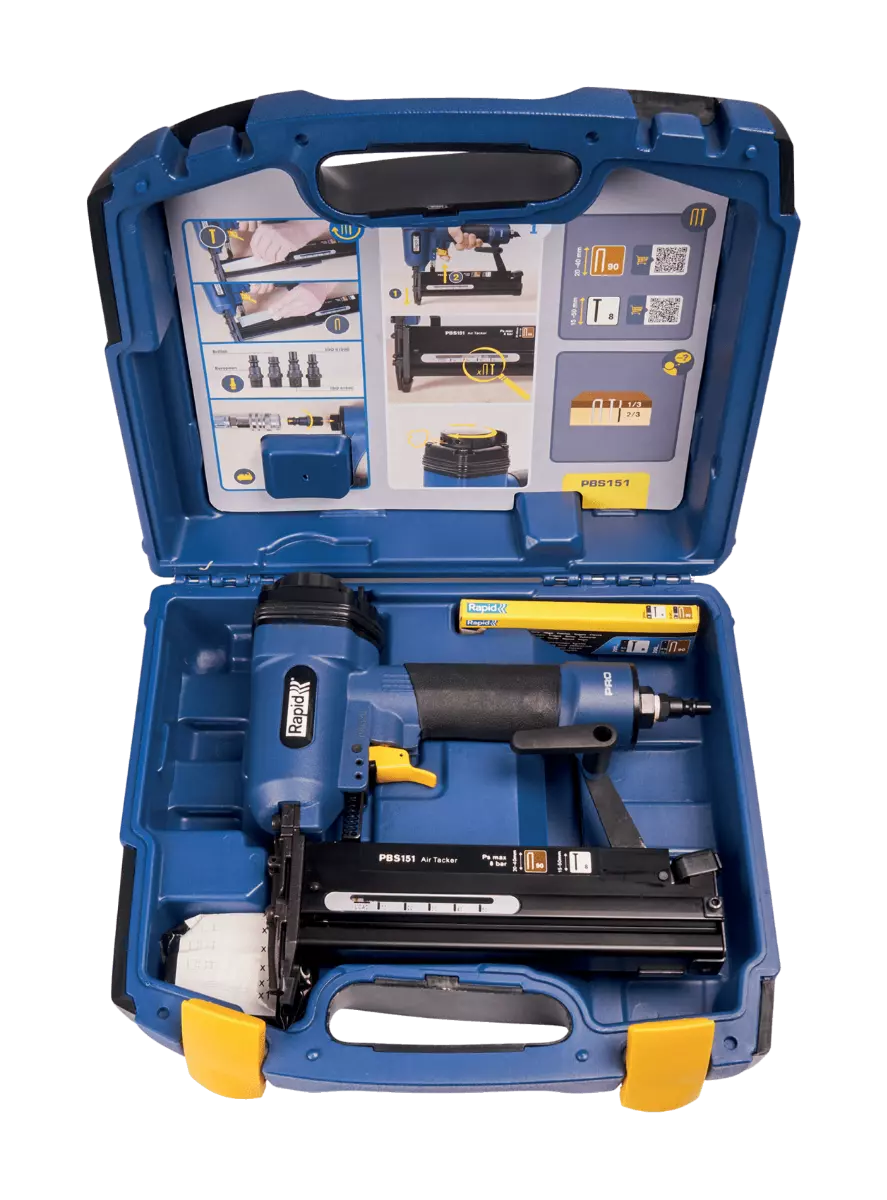
Koffer, 200 Klammern, 200 Nägel
Produkt Beschreibung
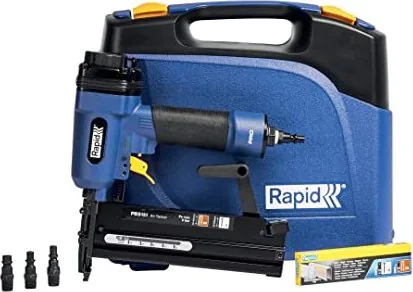
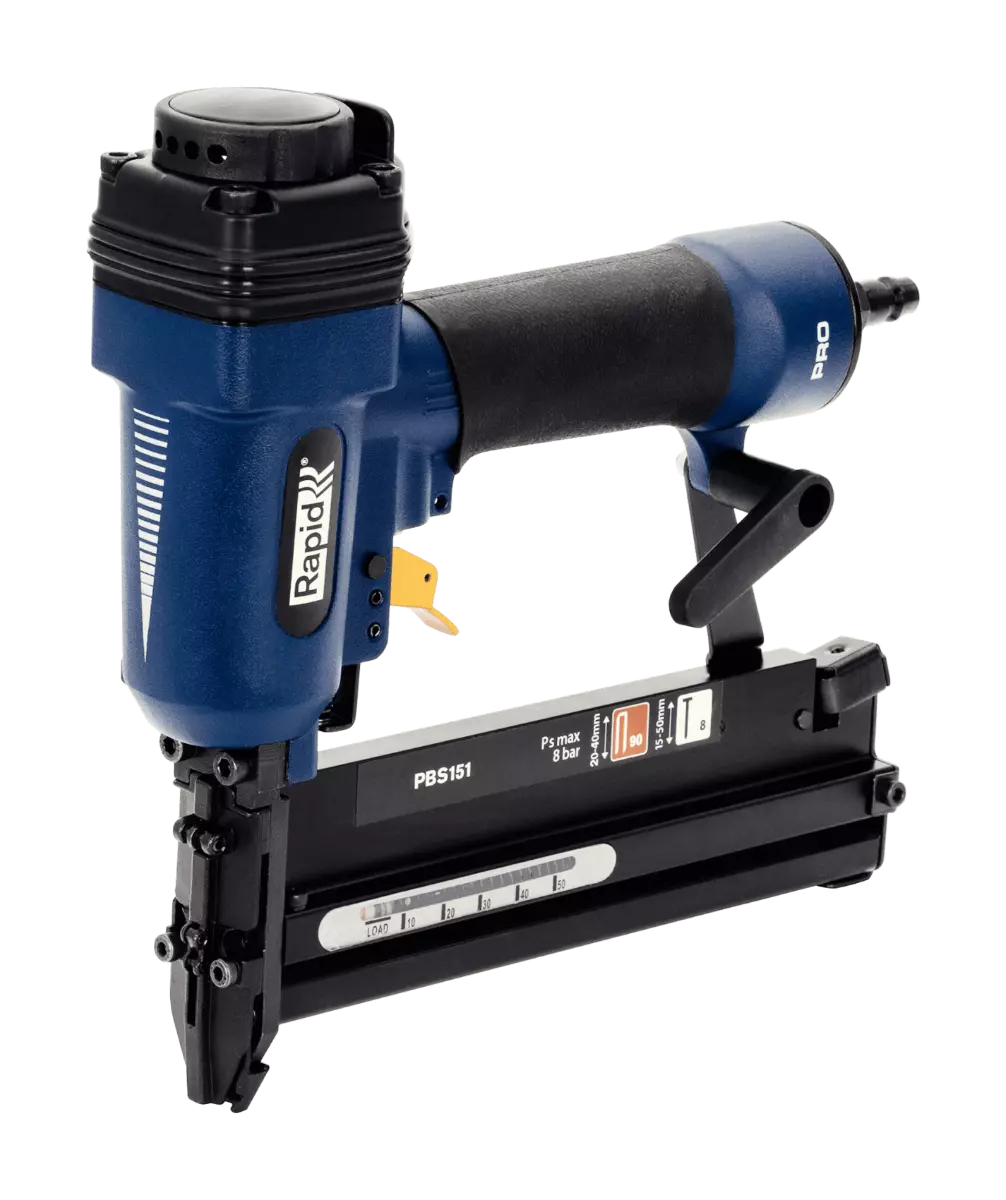
Rapid PRO PBS151 Pneumatischer Tacker/Nagler inkl. Koffer Handbuch
Der Rapid PRO PBS151 pneumatische Tacker/Nagler ist ein robustes, professionelles Befestigungswerkzeug, ausgelegt für hocheffiziente Polsterarbeiten, Paletten-, Möbel- und allgemeine Produktionsarbeiten. Kompakt und gut ausbalanciert kombiniert der PBS151 ein langlebiges Metallgehäuse mit Kontakt-Auslösung und liefert zuverlässige, wiederholbare Leistung bei einer Vielzahl von Befestigungsaufgaben. Er nimmt Rapid no90 Klammern (15–40 mm) und Rapid no8 Nägel (15–50 mm) mit einer Magazin-Kapazität von 110 Stück auf, wodurch er sich gut für kontinuierliche Arbeiten eignet, bei denen Geschwindigkeit und Betriebszeit wichtig sind.
Ausgestattet mit einem 1/4" Luftanschluss und einem empfohlenen Betriebsdruckbereich von 5–7 bar (max. 8 bar) ist das Werkzeug für den Betrieb mit gefilterter, trockener, leicht geschmierter Druckluft ausgelegt. Mit einem Gewicht von etwa 1,45–1,53 kg abhängig von den Befestigungselementen bietet es ein solides Gefühl ohne übermäßige Ermüdung des Bedieners. Geräusch- und Vibrationsangaben sind dokumentiert (LpA 97,1 dB, LwA 84,1 dB, Vibration 6,773 m/s²), sodass Anwender Gehörschutz und ergonomische Maßnahmen zur Reduzierung langfristiger Belastungen planen können.
Die praktische Wartung ist unkompliziert: tägliche Kontrollen auf freie Bewegung des Sicherungsbügel(s) und Abzugs, gelegentliche Schmierung mit empfohlenem Hydrauliköl (ISO 46 oder gleichwertig) und Reinigung, um das Eindringen von Staub und Schmutz zu verhindern. Das Handbuch enthält klare Schritte zum Laden, Entladen und Beseitigen von Störungen sowie Fehlerbehebung und eine Ersatzteilliste (Reparaturkits A, B, C), um Ausfallzeiten zu minimieren.
Sicherheit wird durchgehend betont: Vor Wartungsarbeiten stets die Luftzufuhr trennen, geeigneten Augen- und Gehörschutz verwenden, das Werkzeug nicht auf Leitern oder instabilen Plattformen einsetzen und niemals mit Sauerstoff oder anderen Flaschengasen betreiben. Der PBS151 unterstützt Kontakt-Auslösung für Produktionsanwendungen, aber Anwender werden vor Anwendungen gewarnt, bei denen der Dauer-Kontaktmodus ungeeignet ist (z. B. Schließen von Kisten oder Sichern von Transportsystemen).
Ob Sie Polsterarbeiten ausführen, Paletten montieren oder routinemäßig in der Produktion nageln, der Rapid PRO PBS151 bietet eine Kombination aus Kapazität, Kontrolle und Wartungsfreundlichkeit. Der mitgelieferte Koffer schützt das Werkzeug und Zubehör und macht es transportfähig, und das technische Handbuch liefert umfassende Spezifikationen, damit Bediener Druck, Befestigungstyp und Wartungsroutinen korrekt einstellen können.
Hinweise
- Verwenden Sie den niedrigsten notwendigen Luftdruck, um Befestigungen korrekt zu treiben, um Geräusche, Vibrationen und Verschleiß zu reduzieren.
- Tragen Sie bei Betrieb des Werkzeugs einen den ANSI/EN/AS/NZS-Normen entsprechenden Augenschutz und geeigneten Gehörschutz.
- Folgen Sie dem empfohlenen Öltyp und geben Sie 2–5 Tropfen über den Luftanschluss hinzu, wenn Schlauchlängen 10 m überschreiten.
- Trennen Sie die Luftzufuhr vor dem Laden, der Wartung oder dem Beseitigen von Störungen.
Suche nach 67.732 Bedienungsanleitungen online


Marke oder Modell eingeben