Manual.ly Logo

Moldex Series 9000 EasyLock Bedienungsanleitung

0,0 · 0 Bewertungen

PDF-Handbuch · 44 Seiten

Deutsch

M: QW-35-FL
Seite

/ 44

Loading...
4059dcbd114d49994f910f96f037830bf142 page 5
3
GB – Instructions for Series 9000 Masks
Important Information for Users
This manual is only valid in conjunction with the instruction manual for Moldex Series
7000/9000 gas and particulate filters. Failure to comply with these instructions on
how to use the product and failure to wear the respiratory protection in the polluted
area may negatively impact on the health of the user and lead to permanent damage
and life-threatening injuries.
• This breathing apparatus does not supply oxygen (02) • Only use the product in ad
-
equately ventilated areas,(19.5 Vol.-% oxygen) • The mask and filters must be selected
in accordance with the pollutant type and concentration (see Table 2). • In the case
of gases with insufficient warning properties, filters may only be used if special usage
policies are specified for this purpose. • If the conditions are uncertain or changeable,
self-contained breathing apparatus must be worn. • You must exit the working area
and replace the respirator mask immediately if: – the mask is damaged, – you expe
-
rience difficulty in breathing, – you experience dizziness or fatigue. – you can taste
or smell hazardous substances or if you experience irritation • Read the instruction
manual before using the mask. • The product does not contain any metallic parts that
could cause ignition in potentially explosive atmospheres. • If you have any questions
about how to use the product, please contact Moldex-Metric. • You must also observe
the relevant rules and regulations when using respiratory equipment. • Under certain
circumstances, persons with beards, long sideburns or other anomalies in the area
around the sealing lines may be unable to achieve a proper sealing fit. Spectacle
frames that extend under the sealing line will impede a proper sealing fit. • The masks
must not be modified in any way. • Users of the masks and filters must be familiar with
how to handle them correctly. • When not in use, the mask and filter must be stored in
an uncontaminated environment.
Caution: Do not use filter equipment in unventilated containers and confined spaces.
Preparations Before Using the Full-mask
The full-mask must always be checked before use. Do not use a damaged or defective
mask. Seek the immediate assistance of a supervisor.
You must check • The mask and the filters for fractures, deformations, cracks and
contamination. • Whether the head strap is torn, nicked or damaged in any other way
and whether it provides sufficient elasticity. • The inhalation and exhalation valves
as well as the sealing rings on the filter connections for contamination, deformation,
fractures and cracks. Make sure that the valves and sealing rings are fitted correctly. •
The use-by-date of the filter and their correct fitting in accordance with the instruction
manual for gas and particulate filters. Fitting/removing the full-mask (Figures 1, 2, 3
and 4) Open the straps fully at the 4 adjustment points and hold the head strap with
one hand at the bracing with the Moldex lettering. Place the opening of the head strap
at the back of the neck and pull the mask down over your face from above. At this point,
make sure that no hairs are trapped between the sealing lip and your face. Position
the mask on your face and use one hand to press the mask firmly against your mouth
and chin. Now use your other hand to pull the neck strap tight on one side and then
repeat the procedure on the other side. To ensure the best possible seal between mask
and face, you should always tighten the neck straps first. The head strap must lie flat
on your head. To ensure that the mask fits comfortably, adjust the head and neck strap
equally. Before entering your working area, check that the mask creates a seal around
the face. To remove the mask, first loosen the clips on the neck strap by pulling the mask
away from your face. Using suction to check the face seal (Figure 5) Place the palm
of your hand over the opening on the filter cover to seal it and breathe in slowly. If the
facepiece contracts slightly, the mask is correctly seated. If you notice an inflow of air,
adjust the position of the mask on your face or adjust the tension of the straps. Repeat
this check until a seal is achieved. Using excess pressure to check the face seal (Figure
6) For full-masks equipped with an EN 148-1 connection, check the face seal before
fitting the filter to the facepiece. Place the palm of your hand over the exhalation valve
and breathe out slowly. If no air escapes between the facepiece and your face, a prop
-
er sealing fit is achieved. If you notice air escaping, adjust the position of the mask on
your face or adjust the tension of the straps. Repeat this check until a seal is achieved.
Under no circumstances should you enter a hazardous area if you are unable to
achieve a proper sealing fit. Seek the assistance of a supervisor.
Maintaining the Full-mask
The maintenance intervals as set out in the national regulations must be adhered to.
The date of manufacture is shown on the inside of the face seal in the chin area.
Cleaning/Disinfection We recommend cleaning the mask after each use. If not in use,
clean the mask after 6 months at the latest. Remove the filter; clean the facepiece
with warm water (max. 50°C). If necessary, use a neutral cleaning agent and an
alcohol-based disinfectant. To clean the valve membrane, remove it from the holder.
To clean the inner mask, unfasten it from the two stop points. To refit it, use the guide
rails on the lower part of the lens and the two stop points. To dismantle the filter, refer
to the instruction manual for gas and particulate filters. After having cleaned or disin
-
fected the mask, the face seal needs to be checked by means of suitable leak testing
equipment. Before cleaning pull the protective film away from the lens Dry the mask
thoroughly before putting on a new protective film and before storing it. Storage Keep
the 9000 mask sealed in a dry, uncontaminated environment. Protect against sunlight
and sources of heat (see the "Storage" icons). The name of the wearer and a record
of the filter changes can be noted on the packaging. Caution: At low temperatures,
moisture can cause the valves to freeze up. The date of manufacture is engraved on
the inside of the mask. Calendar clocks see page 39. Exhalation Valve (Spare Part
No. 9974 [b]) Fold down the cover of the exhalation valve and check the exhalation
valve and valve seat for contamination, deformation, fractures or cracks. Replace the
valve membrane when necessary, or every 4 years at the latest. Please note date of
replacement. Inhalation Valve (Spare Part No. 9974 [a]) Check the inhalation valve
on the inner mask and on the inside of the filter connection for contamination, defor
-

Chatten Sie mit Ihrem Moldex Series 9000 EasyLock-Handbuch mithilfe von KI

Erhalten Sie sofortige KI-Antworten aus Ihrem Moldex Series 9000 EasyLock-Handbuch

Fragen Sie alles über Moldex Series 9000 EasyLock. Antworten stammen aus diesem Handbuch, mit den Seiten, auf denen sie basieren.

Series 9000 EasyLock Wartungsplan

Erinnere mich, wenn eine Wartung faellig ist
Alle 6 Monate
Unbenutzte Maske reinigen

Wenn die Maske nicht in Gebrauch ist, muss sie mindestens alle 6 Monate gereinigt werden, um Hygiene und Funktionsfähigkeit zu gewährleisten.

Alle 4 Jahre
Membran des Ausatemventils ersetzen

Ersetzen Sie die Membran des Ausatemventils bei Bedarf oder spätestens alle 4 Jahre. Notieren Sie das Datum des Austauschs.

Nach jedem Gebrauch
Maske reinigen und desinfizieren

Entfernen Sie die Filter und reinigen Sie das Gesichtsteil mit warmem Wasser (max. 50 °C). Verwenden Sie bei Bedarf ein neutrales Reinigungsmittel oder einen Alkohol-Desinfektionsmittel. Überprüfen Sie nach der Reinigung die Dichtung.

Vor jedem Gebrauch
Maske und Ventile prüfen

Überprüfen Sie vor dem Tragen die Maske, Filter, Kopfbänder, Ein- und Ausatemventile sowie die Dichtungsringe auf Beschädigungen, Verschmutzungen oder Verformungen.

Kostenlose Wartungserinnerungen

Abgestimmt auf Ihr Kaufdatum. Immer kostenlos, jederzeit abbestellbar.

Mit dem Absenden stimmen Sie der Datenschutzerklarung zu. Sie konnen sich in jeder E-Mail mit einem Klick abmelden.
M: qwen/qwen3.8-flash

Stellen Sie eine Frage

0/1000

Empfehlen Sie Series 9000 EasyLock?

Ja Nein

Häufig gestellte Fragen

A

Nein, diese Atemschutzvorrichtung liefert keinen Sauerstoff. Sie ist ausschließlich für Bereiche mit ausreichender Belüftung bestimmt, die mindestens 19,5 Prozent Sauerstoffvolumen enthalten.

Ist diese Antwort hilfreich?

A

Es wird empfohlen, die Maske nach jeder Verwendung zu reinigen. Wenn sie nicht verwendet wird, muss sie mindestens alle sechs Monate gereinigt werden, um die Ansammlung von Kontaminationen zu verhindern.

Ist diese Antwort hilfreich?

A

Brillengestelle, die unter die Abdichtungsline reichen, behindern eine ordnungsgemäße Abdichtung. Sie können den optionalen Brillenaufsatz verwenden, aber stellen Sie sicher, dass das Gestell die Dichtung nicht bricht.

Ist diese Antwort hilfreich?

A

Sie müssen den Arbeitsbereich sofort verlassen und das Atemschutzgerät austauschen. Das Riechen oder Schmecken gefährlicher Substanzen deutet auf einen Bruch der Dichtung oder eine Übersättigung des Filters hin.

Ist diese Antwort hilfreich?

A

Ja, das Produkt enthält keine metallischen Teile, die in potenziell explosiven Atmosphären eine Zündung verursachen könnten, was es für solche Umgebungen sicher macht.

Ist diese Antwort hilfreich?

A

Führen Sie eine Dichtprüfung durch, indem Sie Ihre Hand über die Filteröffnung legen und langsam einatmen. Wenn sich die Maske leicht zusammenzieht, ist die Dichtung korrekt. Alternativ decken Sie das Ausatemventil ab und atmen Sie sanft aus, um auf Lecks zu prüfen.

Ist diese Antwort hilfreich?

M: QW-35-FL

Vorteile und Nachteile

Vorteile

  • Erfüllt den EN 136:1998 CL2 Standard für hochwertigen Atemschutz
  • EasyLock Kopfriemensystem ermöglicht schnelle und präzise Einstellung
  • Kompatibel mit einer breiten Palette von P1, P2, P3 Partikel- und Gasfilterklassen
  • Keine metallischen Teile reduzieren Zündrisiken in potenziell explosiven Atmosphären
  • Klare Polycarbonatlinse mit optionaler Brillenaufsatzintegration
VS

Nachteile

  • Erfordert strikte Einhaltung von Wartungsplänen zur Gewährleistung der Langlebigkeit
  • Bärte oder Bartwuchs können das Erreichen einer ordnungsgemäßen Abdichtung verhindern
  • Brillenbügel, die unter die Abdichtungsline reichen, können die Dichtung beeinträchtigen
  • Ventile können einfrieren, wenn sie niedrigen Temperaturen mit Feuchtigkeit ausgesetzt sind
  • Die Filterauswahl muss spezifische Schadstofftypen und Konzentrationen genau entsprechen
M: QW-35-FL

Produkt Spezifikation

Funktionen

Ventil, Gesichtsschutz, Vier-Punkt-Gurt, verstellbar, austauschbarer Filter

M: QW-35-FL

Produkt Beschreibung

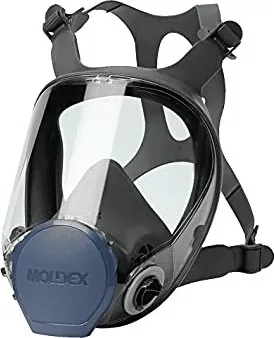
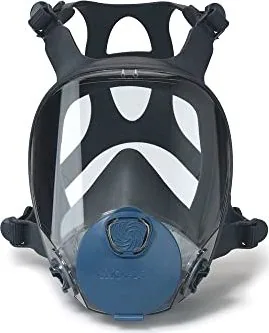
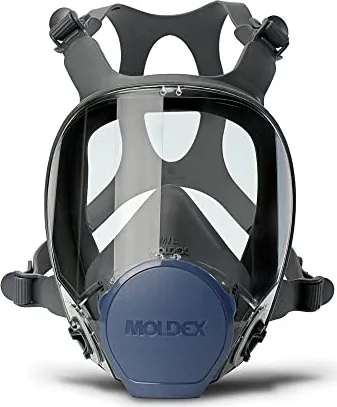
Schützen Sie Ihre Lunge mit dem Moldex Serie 9000 EasyLock Atemschutzgerät

Das Moldex Serie 9000 EasyLock Atemschutzgerät Vollgesichtsmaske steht als Höhepunkt der persönlichen Schutzausrüstung für anspruchsvolle Industrieumgebungen. Diese robuste Vollgesichtsmaske bietet umfassenden Schutz vor einer Vielzahl gefährlicher Substanzen, einschließlich giftiger Gase, Dämpfe und partikulärer Stoffe. Entwickelt, um den strengen EN 136:1998 CL2 Standard zu erfüllen, stellt sie sicher, dass Benutzer vor lebensbedrohlichen Schadstoffen geschützt sind und gleichzeitig Komfort bei längerem Tragen bieten.

Eine der herausragenden Merkmale dieses Atemschutzgeräts ist sein innovatives EasyLock System, das den Prozess des An- und Ablegens der Maske vereinfacht. Die Kopfriemen verfügen über vier Einstellpunkte, die eine angepasste Passform ermöglichen, die verschiedene Gesichtsformen berücksichtigt. Eine korrekte Passform ist entscheidend; die Maske muss eine luftdichte Abdichtung um Mund und Kinn erzeugen, ohne Haare einzufangen oder Brillengestelle zu stören. Benutzer werden angewiesen, vor dem Betreten eines kontaminierten Bereichs sowohl negative als auch positive Druckprüfungen durchzuführen, um die Integrität der Abdichtung zu überprüfen.

Wartung und Hygiene sind von größter Bedeutung beim Einsatz von Atemschutz. Das Handbuch empfiehlt, das Gesichtsstück nach jeder Verwendung mit warmem Wasser zu reinigen, das 50 Grad Celsius nicht überschreitet. Für eine tiefere Desinfektion können neutrale Reinigungsmittel und alkoholbasierte Desinfektionsmittel verwendet werden. Es ist entscheidend, den Filter zu entfernen, die inneren Maskenkomponenten zu reinigen und Ventile auf Ablagerungen oder Schäden zu überprüfen, bevor sie gelagert werden. Die Maske sollte immer in einer trockenen, unkontaminierten Umgebung fern von direkter Sonneneinstrahlung und Wärmequellen aufbewahrt werden, um Materialabbau zu verhindern.

Vielseitigkeit ist ein weiterer wichtiger Aspekt der Serie 9000. Sie unterstützt verschiedene Filter, von P1 Partikelfiltern, die das vierfache Arbeitsplatzgrenzwert (AGW) bieten, bis hin zu Klasse 2 Gasfiltern, die bis zum zwanzigfachen AGW oder 5000 ppm bieten. Spezielle Modelle wie die 9004, 9005 und 9006 nutzen den EN 148-1 Anschluss für standardisierte Filterbefestigung. Egal ob Sie in der chemischen Verarbeitung, Landwirtschaft oder im Notfallmanagement arbeiten, dieser Atemschutz bietet die Zuverlässigkeit, die notwendig ist, um Ihre Gesundheit zu schützen.

Wichtige Wartungshinweise

Ersetzen Sie die Membran des Ausatemventils mindestens alle vier Jahre. Stellen Sie sicher, dass die Nasenklammer und die Kopfriemen regelmäßig auf Verschleiß überprüft werden. Wenn die Maske Anzeichen von Rissen, Verformungen oder Kontamination zeigt, werfen Sie sie sofort weg. Modifizieren Sie niemals die Maskenstruktur, da dies die Garantie ungültig macht und die Sicherheit beeinträchtigt.

M: QW-35-FL

© Copyright 2026 Manual.ly
