
Manual.ly Logo

Carson Tyrann Single Blade 320 Bedienungsanleitung

0,0 · 0 Bewertungen

PDF-Handbuch · 32 Seiten

Deutsch

M: QW-35-FL
Seite

/ 32

Loading...
72334901dea92b602cd5abd09530e28c6e51 page d
13 // GB
Make sure that you have sufficient insurance cover when practising your hobby or take
out a special insurance for model aircraft. The contact address for this is Deutscher
Modellfliegerverband e.V. Rochusstr. 104 – 106, 53123 Bonn.
Only a well-maintained model will function properly. Only use approved spare parts and never
improvise with any unsuitable items.
It is the user’s responsibility to ensure that the model is functioning correctly and that all nuts,
bolts and screws are tightened.
Keep the model well beyond the reach of small children. They may unintentionally activate the
model and cause themselves injury with it, or they may put batteries and small parts into their
mouths and swallow them.
Preparations
Never start flying before you have made sure of the following points:
• Pay attention to visible damage on the model, remote control, battery charger, and lithium
battery.
• Ensure that the model is functioning correctly and that all screwed and plugged connections
are fitted precisely and tightly.
• The flight battery must be fully charged and correspond to the correct voltage. Only use
new/fresh batteries for the transmitter.
• Make sure that all servos respond correctly to the signals of the transmitter.
• Always check the radio operation before starting the model.
Flight operation
The model is primarily designed for indoor flights since its low weight and unstable flight
position resulting from the construction type make it very susceptible to air movements.
Moreover, the components are not dust- and moisture-proof.
Do not fly any longer than one battery charge
Afterwards, the model must cool down for at least 5 minutes.
Then recharge the battery. Avoid deep discharge in any case.
General information
• If you have little or no experience with model aircraft you should practice with a flight
simulation program first.
• Ask experienced model pilots for advice with the fine settings of your model aircraft.
• Familiarise yourself with the control functions of your trnasmitter.
• Start your first flights, standing behind the model and looking in the flight direction. In this
case, the control reaction equals the controlling direction.
• Also familiarise yourself with the movements of the model, when it flies towards you
(response opposite to the control direction)!
Safety Precautions Lithium batteries:
1. General: Lithium batteries (accumulators) are energy storage devices with a high energy
density and can present risks. For this reason, particular care is needed when charging,
discharging, storing and handling. Read these instructions very carefully before first using the
battery. Do not fail to take note of the warning notices and instructions for use. Misuse can lead
to risks such as explosion, overheating or fire. Failure to observe the instructions for use leads to
early failure and other defects. The instructions should therefore be kept in a safe place and it is
essential that they are handed over to the second user if the batteries are passed on.
2. Warning notices:
• Avoid short-circuits. A short-circuit may well destroy the product. Cables and connections
must be well insulated.
• It is essential when connecting the battery to ensure that the polarity is correct.
• Original plug connectors and cables may not be cut off or changed - if need be, use an
adapter cable.
• Do not expose the battery to excessive heat or cold or to direct sunlight. Do not throw in the
fire. Do not place the battery in contact with water or other liquids.
• Charge the battery only with charging units intended for the purpose and always use the
balancer connection. It is only by using the balancer connection that optimum charging can
be ensured. If this connection is not used, charging is subject to the risks mentioned above.
Before charging, always first allow the battery to cool to ambient temperature. Never charge
while hot.
• When charging, place the battery on a non-flammable, heat-resistant support. There should
be no flammable or readily ignited objects in the vicinity of the battery.
• During charging or operation, never leave the battery unsupervised.
• Do not fail to keep to the recommended charge/discharge current.
• The battery casing must not be damaged. It is essential to avoid damage by sharp objects
such as knives or the like, from dropping, impact, bending etc. Damaged batteries may no
longer be used.
• Batteries are not toys. They should be kept away from children.
3. Charging instructions: Lithium batteries are charged according to the CC-CV procedure.
CC stands for “constant current“, which is applied during the first phase of charging. Once the
battery reaches the maximum voltage configured in the charger, it switches to CV (constant
voltage) for the second phase of charging. The battery voltage no longer increases. The charging
current now falls continuously until the battery is fully charged. The maximum charging current
for the battery is 1C (C=nominal capacity of the battery, e.g. for a battery with a nominal
capacity of 2700 mA, the maximum charging current for the battery is 2700 mA (2.7 A)). Never
charge several batteries together from a single charger. Differing states of charge and capacities
can lead to overcharging and destruction.
4. Storage instructions: Lithium batteries should be stored charged to 20-50 % of their
capacity and at a temperature of 15-18 °C. If the cell voltage falls below 3 V, they should be
recharged. Deep discharge and storage when discharged (call voltage <3 V) will render the
battery unusable.
5. General terms of guarantee: There is a legal guarantee for production and material faults
as applicable at the time of dispatch. No liability is accepted for normal wear and tear. This
guarantee does not apply for defects attributable to improper use, inadequate maintenance,
third-party interference or mechanical damage. This applies, in particular, to used batteries
and batteries clearly showing signs of use. Damage and loss of performance due to improper
handling and/or overload are not product faults. Batteries are consumables and subject to a
certain ageing. This is influenced by factors such as the charge/discharge currents, the charging
procedure, the operating and storage temperatures and the state of charge during storage.
The ageing shows itself in, among other things, an irreversible loss of capacity. In the model
field, where batteries are frequently used to supply motors, very high currents can flow from
time to time.
6. Exclusion of liability: Since we are unable to have any control over charge/discharge, handling,
compliance with assembly and operating instructions, battery replacement and its care and
maintenance, Tamiya / Carson can accept no liability for loss, damage or costs incurred. Any claim
for damages that may result from operation, failure or faulty operation or that is in any way related
thereto will therefore be refused. We accept no liability for personal injury or material damage and
their consequences that arise from our delivery.
7. Disposal instructions: Batteries are hazardous waste. Damaged or unusable cells must be
disposed of in the correct manner.
No liability for printing errors, we reserve the right to make changes!
SAFETY PRECAUTIONS LITHIUM BATTERIES

Chatten Sie mit Ihrem Carson Tyrann Single Blade 320-Handbuch mithilfe von KI

Erhalten Sie sofortige KI-Antworten aus Ihrem Carson Tyrann Single Blade 320-Handbuch

Fragen Sie alles über Carson Tyrann Single Blade 320. Antworten stammen aus diesem Handbuch, mit den Seiten, auf denen sie basieren.

Tyrann Single Blade 320 Wartungsplan

Vor jedem Flug
Modell auf sichtbare Schäden prüfen

Prüfen Sie das Modell, die Fernsteuerung, das Ladegerät und den Akku vor jedem Flug auf sichtbare Schäden.

Vor jedem Flug
Alle Schrauben und Verbindungen festziehen

Stellen Sie sicher, dass alle geschraubten und gesteckten Verbindungen vor dem Flug präzise und fest sitzen.

Vor jedem Flug
Servo-Reaktion überprüfen

Vergewissern Sie sich, dass alle Servos vor dem Start des Modells korrekt auf die Signale des Senders reagieren.

Vor jedem Flug
Funkreichweite prüfen

Überprüfen Sie stets den Funkbetrieb und die Reichweite vor dem Start des Modells.

Nach jedem Flug
Modell 5 Minuten abkühlen lassen

Fliegen Sie nicht länger als eine Akkuladung. Lassen Sie das Modell anschließend mindestens 5 Minuten abkühlen.

Bei Bedarf
Beschädigte Propellerblätter ersetzen

Beschädigte Propeller- oder Rotorblätter müssen sofort ersetzt werden. Versuchen Sie nicht, sie zu reparieren.

M: qwen/qwen3.8-flash

Stellen Sie eine Frage

0/1000

Empfehlen Sie Tyrann Single Blade 320?

Ja Nein

Häufig gestellte Fragen

A

Es gibt eine 24-Monats-Garantie gegen Herstellungsfehler, gültig ab dem Kaufdatum bei einem autorisierten Händler.

Ist diese Antwort hilfreich?

A

Es ist primär für den Innenbetrieb ausgelegt. Außenflüge erfordern Windstille, um Kontrollverlust aufgrund des geringen Gewichts zu verhindern.

Ist diese Antwort hilfreich?

A

Die LiPo-Batterie benötigt typischerweise ein bis zwei Stunden, um mit dem beiliegenden USB-Ladegerät vollständig aufgeladen zu werden.

Ist diese Antwort hilfreich?

A

Kinder unter sechzehn Jahren sollten dies nur unter Aufsicht eines Erwachsenen betreiben, da es nicht als Spielzeug eingestuft ist.

Ist diese Antwort hilfreich?

A

Lassen Sie den Motor mindestens fünf Minuten abkühlen, bevor Sie versuchen, das Modell erneut zu fliegen.

Ist diese Antwort hilfreich?

A

Ja, Sie können zwischen Mode 1 und Mode 2 umschalten, indem Sie die Sendereinstellungen verwenden, bevor Sie starten.

Ist diese Antwort hilfreich?

A

Versicherung ist gesetzlich oft für funkgesteuerte Fluggeräte aufgrund der involvierten Betriebsrisiken erforderlich.

Ist diese Antwort hilfreich?

M: QW-35-FL

Vorteile und Nachteile

Vorteile

  • Bereits einsatzbereit aus der Box ohne Montage
  • Integrierter Kreisel für stabiles Flugverhalten
  • LED-Beleuchtung verbessert die Sichtbarkeit während des Flugs
  • Beinhaltet automatische Start- und Landefunktion
  • 2.4 GHz Fernsteuerung verhindert Interferenz
VS

Nachteile

  • Primär für Innenraumgebrauch aufgrund von Windempfindlichkeit ausgelegt
  • Kurze Flugdauer pro einziger Batterieladung
  • Erfordert Erwachsenenaufsicht für Betreiber unter 16 Jahren
  • Motor benötigt Kühlzeit zwischen Nutzungssitzungen
  • Versicherungsschutz oft obrigat für Betrieb
M: QW-35-FL

Produkt Spezifikation

Typ

Hubschrauber

Frequenz

2,4 GHz

Antrieb

Elektromotor

Flugzeit

18 min

Abmessungen

32,00x24,99x8,00 cm (LxBxH)

Gewicht

53,01 g

M: QW-35-FL

Produkt Beschreibung

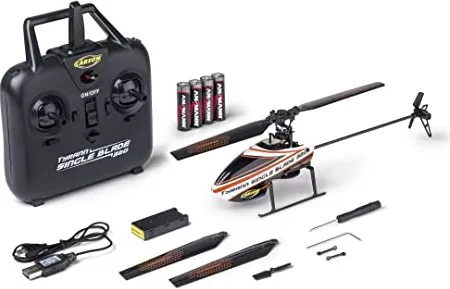
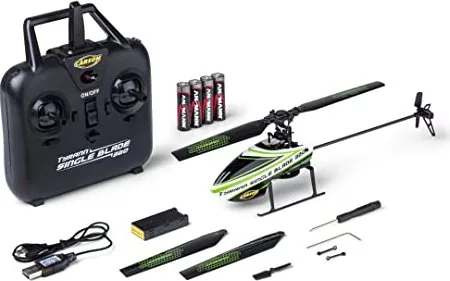
Erleben Sie die Freude am Fliegen mit dem Carson Tyrann Single Blade 320

Der Kauf eines neuen ferngesteuerten Modells ist für Hobbyisten, die den Himmel erkunden möchten, immer ein aufregender Moment. Der Carson Tyrann Single Blade 320 hebt sich als ein robuster Einstieg in die Welt der Luftrobotik ab. Dieses Gerät ist für den sofortigen Betrieb ausgelegt und kommt sofort einsatzbereit aus der Box, ohne dass aufwendige Schrauberarbeit erforderlich ist. Benutzer schätzen die Bequemlichkeit der kompletten Montage, die die Einstellzeit erheblich minimiert. Alle erforderlichen technischen Details und genauen Anweisungen finden Sie im Carson Tyrann Single Blade 320-Handbuch im Lieferumfang, um jederzeit einen korrekten Betrieb sicherzustellen. Das 2.4 GHz Fernbedien-System sorgt für eine stabile Verbindung während Ihrer Flüge ohne Interferenz. Es umfasst Funktionen wie automatische Höhenregelung und einen integrierten Kreisel zur Stabilisierung. Dies macht die Lernkurve im Vergleich zu älteren bürstenlosen Modellen viel einfacher. Die LED-Beleuchtung ermöglicht eine bessere Sichtbarkeit, insbesondere beim Fliegen in der Dämmerung oder in beleuchtungsarmen Innenräumen. Zusätzlich bietet der Sender Mode 1- und Mode 2-Einstellungen, sodass Piloten ihre bevorzugte Gasregelungskonfiguration für rechtshändige oder linkshändige Bedienung wählen können.

Sicherheit hat bei der Bedienung jedes Fluggeräts oberste Priorität. Das Design ist am besten für Innenräume geeignet, da die leichte Bauweise es sehr empfindlich gegenüber Outdoor-Windbedingungen macht. Benutzern wird empfohlen, das Gerät in geräumigen Räumen ohne Hindernisse wie Möbel zu bedienen. Beim Fliegen stellen Sie stets sicher, dass Sie sich auf einer ebenen Fläche befinden und überwachen Sie die Batteriestände genau, um Abstürze zu vermeiden. Die beigefügte LiPo-Batterie erfordert spezielle Ladevorgänge, um die Haltbarkeit zu gewährleisten und Sicherheitsgefahren während der Ladevorgänge zu vermeiden. Stellen Sie sicher, dass alle Schrauben und Verbindungen fest sind, bevor Sie versuchen zu fliegen, um die Stabilität zu gewährleisten. Die Batteriespannung muss den korrekten Spezifikationen für optimale Übertragungsreichweite entsprechen. Falls das Modell nicht auf Befehle reagiert, prüfen Sie zuerst die Batteriespannung. Motorüberhitzung deutet auf einen Kühlbedarf vor der weiteren Verwendung hin. Fliegen Sie nicht bei Windstärke größer als eins, um die Kontrolle zu behalten.

Wichtige Wartungshinweise

Regelmäßige Kontrollen der Rotoren und Servoantworten sind für den sicheren Betrieb jede Saison unerlässlich. Ersetzen Sie immer beschädigte Propeller sofort, um Instabilität beim Hovern zu verhindern. Die Garantie deckt Herstellungsfehler für zwei Jahre ab, wenn sie von einem autorisierten Händler gekauft wurde. Sie sind sich bewusst, dass für den Betrieb eine Versicherung erforderlich ist, wie es den lokalen gesetzlichen Richtlinien für ferngesteuerte Fluggeräte entspricht. Vermeiden Sie eine Tiefentladung der Batteriezellen, um die Gesamtlebensdauer zu verlängern. Halten Sie das Modell außerhalb der Reichweite von Kindern unter sechzehn Jahren. Halten Sie sich stets an die in der Dokumentation gefundenen Richtlinien, um keine Garantieforderungen zu verwirken. Das Laden dauert mit dem USB-Ladegerät ungefähr ein bis zwei Stunden. Laden Sie erst wieder, wenn das Modell vollständig abgekühlt ist, um Schäden an den Lithiumzellen zu vermeiden.

M: QW-35-FL

© Copyright 2026 Manual.ly